How to Grow & Care for Tuberous Begonias
Growing flowering and frost-tender plants such as tuberous begonias can ostensibly seem like an intimidating task. However, zippo would be daunting if you lot're matching up with the necessary growing conditions.
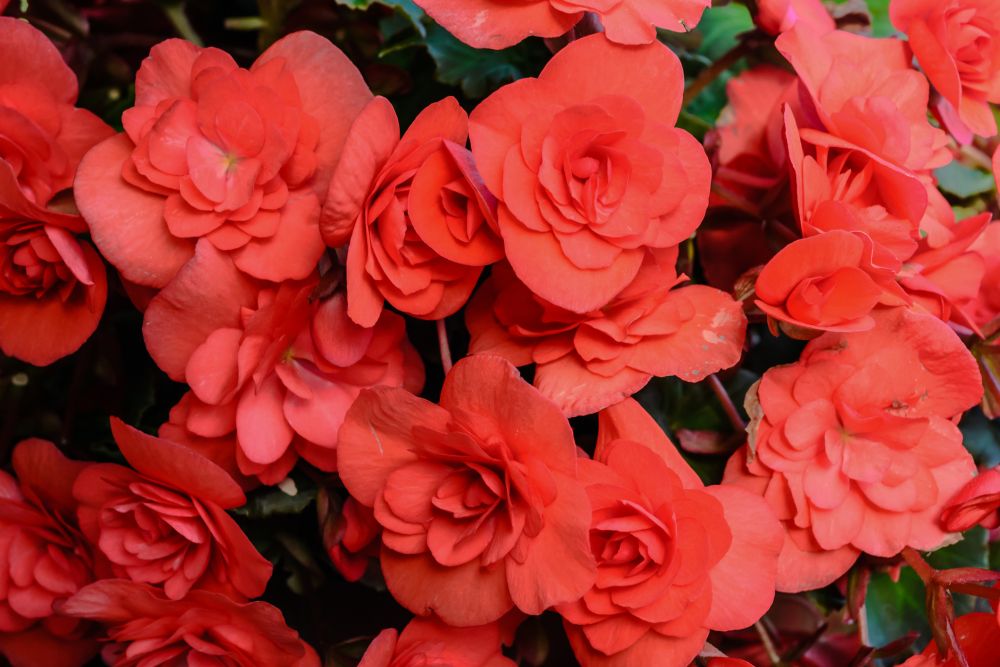
Well, these gorgeous perennials come from the Begoniaceae family unit and are known to produce vibrant and showy flowers. The blooms create an inviting aesthetic when growing inside hanging baskets. So, let's get started with the basics so yous can go the hang of growing and caring for these flowering perennials.
More About Tuberous Begonias
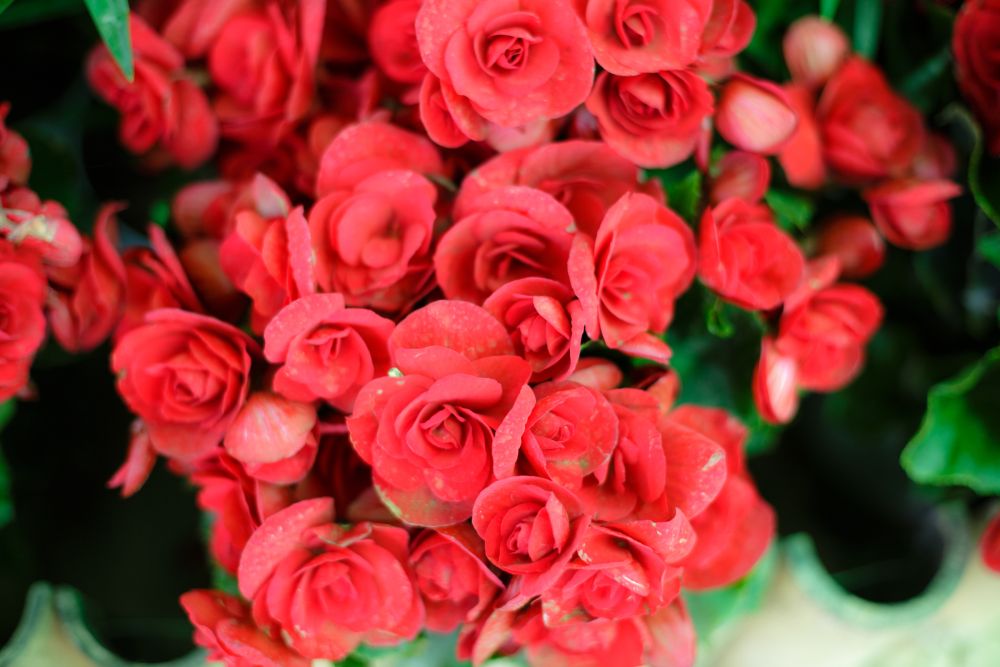
There are a handful of tuberous begonia varieties commonly grown for their sumptuous and imposing blooms. In most gardening stores, y'all'll probable come across types such equally the 'Nonstop Deep Rose,' 'Mocca White,' 'Go-Get Yellow,' and the 'Solenia Ruddy' tuberous begonia. All of these varieties produce bright and vibrant flowers during the blooming season. Tuberous Begonia plants are not difficult to grow. In the wild, y'all'll find them in shady only boiling forests, often clinging to the limbs of trees. The plants grow from tubers and produce clusters of double blossoms on the stalks and in many colors – white, pinkish, red, lavander, and more. On average, the flowers spread nearly 4′ inches wide, and it'due south no wonder why most growers use this tuberous perennial as a bedding plant.
How to Grow Begonia Tubers Inside Containers
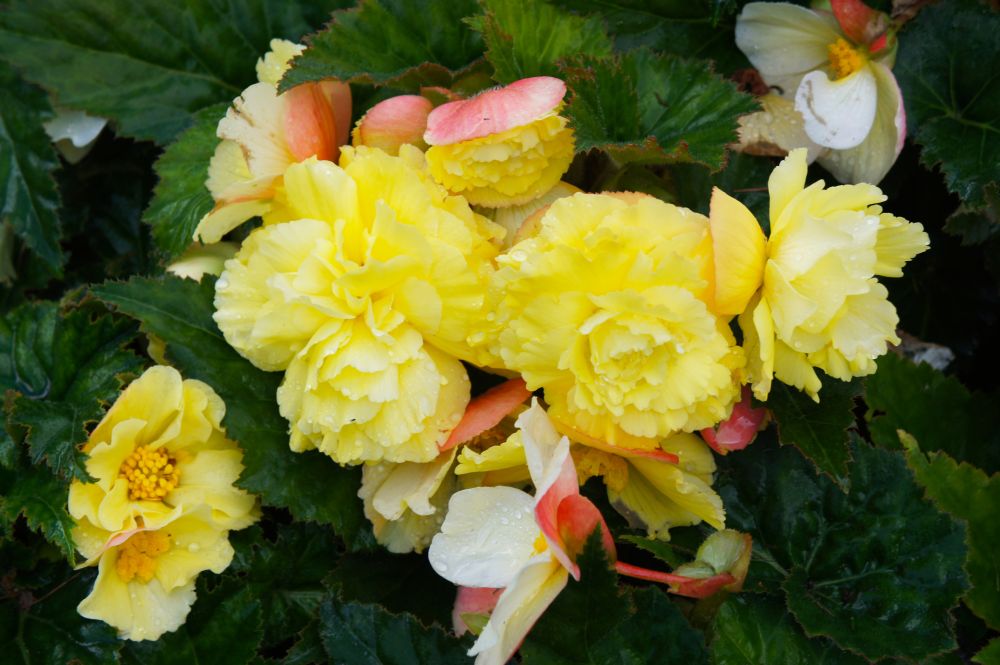
Growing tuberous begonias indoors within containers is a safe bet, peculiarly when the outdoor conditions are favorable. For a picturesque display, utilize hanging baskets that are at least 12′ inches wide. The tubers need to be covered by 1 cm of soil. Be certain to give them plenty of sunlight even when growing indoors, and don't let the soil dry out completely during warmer months since begonias enjoy humid conditions. Employ these tips when planting them within containers:
- Found the tubers within containers with drainage holes to allow out any excess moisture.
- The soil needs to have a light texture. And and so just yous know, we'll discuss more on soil requirements later in this guide.
- Apart from using well-draining soil, it'south all-time to apply containers with a diameter twice the size of the tuber.
- For potted begonias growing in the garden, you desire to space them almost v inches apart.
- Move the container to a warmer location gradually, so the tubers can slowly get accustomed to the new environment.
- During winter, harvest the tubers and store them in a cool place till the side by side growing menstruum.
How to Plant the Tubers Outdoors
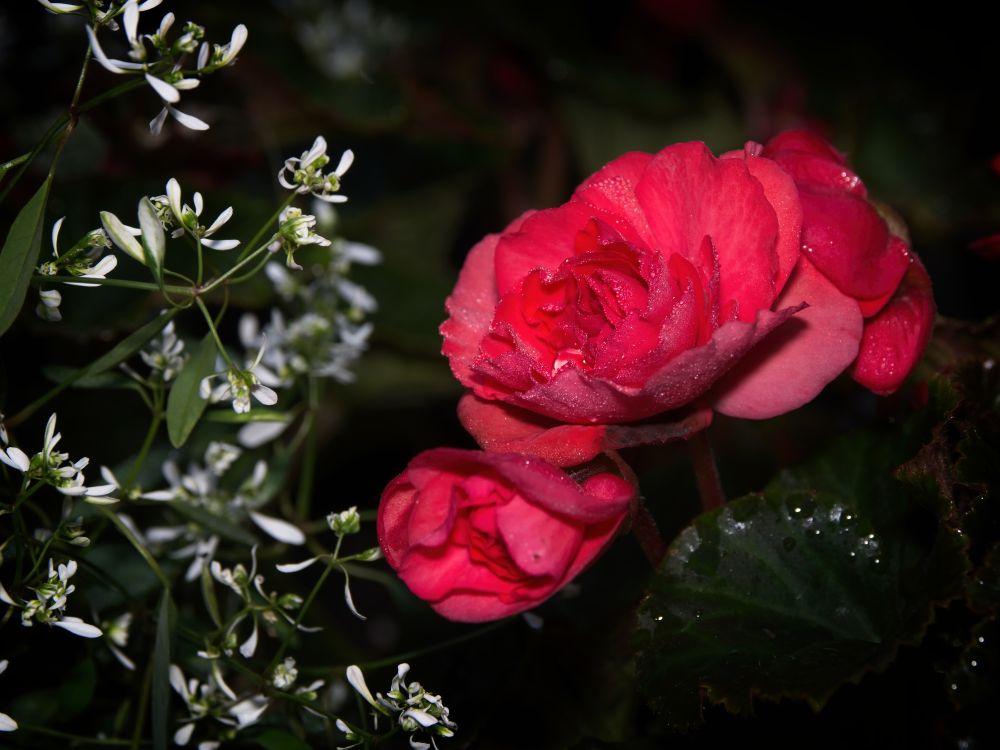
Your tuberous begonia will accept a prepossessing stature while growing outdoors. But it would be needful to sync with the exact conditions this perennial needs to thrive in an outdoor environment. So, here are the like shooting fish in a barrel steps you desire to piece of work with:
- Pick a spot with some partial shade. The blooms and unabridged leaf would both get scorched when exposed to intense estrus from the sun.
- The location has to retain some moisture but also have an efficient drainage capacity. If the soil seems to concur backlog water for too long, yous can ameliorate it with organic materials such as tree barks, compost, and peat moss.
- Mix the soil with sand to loosen information technology upwardly before planting the tubers.
- Be careful non to plant the tubers upside down. Carve up the tubers upward and plant them in the ground partially while the edged side is facing up.
- When planting the tubers, space them out. They demand to grow at least vii or 8 inches apart. Tuberous begonias need aplenty space to grow and receive plenty air circulation.
- Become rid of the blooms after withering, remove the tubers, and store them until the post-obit year's planting flavor.
- During summertime, provide the tubers with even moisture. All the same, the base part of the stems might snap off when exposed to soggy soil for likewise long.
Tuberous Begonia Caring Tips
Flowering & Fragrance
As yous probably know, begonia is a genus of flowering perennials. The blooms on tuberous begonias usually grow in diverse shades such as pink, white, red, and yellow. To ensure blooming takes place in time, you need to constitute the bulbs indoors during the early weeks of spring. There are Begonia types with picotee flowers that have varying colors on the petal edges. Ane of the about captivating traits about tuberous begonias is the flower even when growing under the shade.
Light & Temperature
Before, we explained that tuberous begonias are native to the Andes Mountains, where the altitude is relatively high. Its indigenous surroundings has high humidity, and the nights are a fleck chilly. You, therefore, want to mimic the conditions when growing them both indoors and outdoors. Tuberous begonias are prone to arid and scorching environments. Sadly, Begonias don't tolerate common cold weather, and they'll die when left outside during the winter season. Right from the kickoff, the bulbs volition need warmth quite constantly. They likewise need enough bright light one time the sprouts begin to sally.
When growing inside pots, it'due south much easier to move your Begonias indoors anytime the temperatures fall below l degrees Fahrenheit. Buds of most Begonia varieties will begin to drop once striking by freezing conditions. Grow your tuberous begonias somewhere with filtered low-cal or where they can receive morning calorie-free at most. Avoid placing the growing medium in a depression-light location since the institute will demand sunlight to bloom. During the day, most flowering perennials prefer a temperature range of betwixt 55 to 60 degrees Fahrenheit. Y'all also want to abound this flowering perennial far from strong winds.
Soil & Transplanting
Earlier planting your tuberous begonias, yous want to ensure the soil texture is light and porous enough to let out any excess wet. The tubers, too, demand ample air apportionment. Use ordinary gravel soil, and so mix it with sand to improve drainage. Also, consider amending the potting mixture with one part of peat moss. When planting the tubers, place them in private dirt pots. Containers fabricated of dirt will allow water and moisture to penetrate through since they're porous, compared to plastic pots.
For optimal root growth, yous want to add together a portion of bonemeal. It also helps keep your tuberous begonias from stunted growth. Consider placing pebble rocks on the bottom role of the growing pot to improve drainage. In a nutshell, y'all want to use a potting mix that's platonic for bulbs and check whether it's humus-rich. Before transplanting the bulbs into private containers, it's best to wait till 2 or more leaves have emerged. To avoid any possibility of transplant shock, grow them outdoors after the frost period is over.
Watering
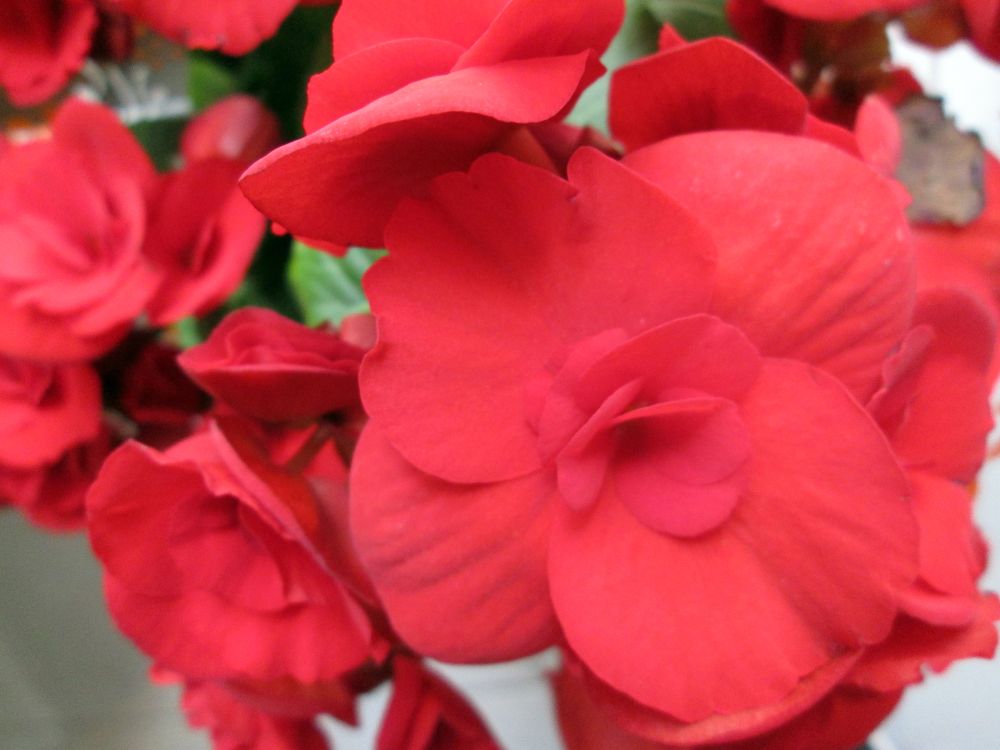
When watering, it'due south necessary to continue the entire foliage dry. The effects of overwatering include powdery mildew that deteriorates the leaf quality aslope many difficult-to-treat bacterial diseases. Keep the soil moist regularly, particularly during the warmer months, but avert overwatering because it could lead to root rot. Using drip irrigation or self-watering planters would be much safer, and both options bear better chances of yielding pleasing results.
During autumn and winter, it'due south typical for the tuberous begonia to become into dormancy. Then, reduce the watering intervals drastically when the temperatures are at their lowest. Apart from rot, too much moisture during this period will concenter pests. When using a commercial potting mix, it'southward vital to read the instructions on the soil label yous're using and maintain the recommended irrigation schedule.
Feeding
Using humus-rich soil together with other organic options would be an effective way to feed your tuberous begonias. They don't need to be fed with constructed fertilizers to expect vibrant and colorful. Simply, on the other hand, your begonias will probable brand the most out of the nutrients. Feeding during the early on weeks of spring when new growth is about to emerge is, therefore, a solid thought. Some of the organic suggestions to get y'all started include fish emulsion, compost tea, and liquid seaweed. If you're a beginner, and then you lot may non take thought of compost equally an option for herbaceous plants such as begonias.
Nonetheless, yous need to know how it works for growing healthier plants. Additionally, your begonia houseplants can benefit from it in many ways to make them grow to exist more colorful and robust. The fertilizing standards are pretty much the same every bit those of most other flowering perennials. And then, a significant phosphorus ratio would be needful since your begonias desperately demand it during the blooming flavour. However, it needs not to be in a college composition than other essential nutrients. For example, you lot tin work with a balanced and soluble fertilizer in the ratio of 10-10-10. Also, you desire to employ the fertilizer at one-half its strength.
How to Propagate Tuberous Begonias
Before nosotros even become started with the ins and outs of propagating this flowering perennial, information technology'south crystal articulate just worth mentioning that all tuberous begonias lack a gristly root system. Instead, they grow in bulbous forms, commonly referred to as tubers. The tubers are harvested from the ground during the dormancy period. Once uprooted and dissever from the parent plant, they're stored indoors in a dark and cool place, then replanted in the early on weeks of spring when the hormones are well-nigh to regain their vigor.
Besides the sectionalisation method, you can propagate your tuberous begonias using leafage cuttings. Later on few months of receiving favorable growing weather condition, the leaf cuttings usually develop new tubers. Therefore, it's best to dissect the tubers during the summer flavour since the chances of transplant shock around this period are possibly slim. Here are some of the steps you demand to piece of work with when propagating your tuberous begonia using tubers:
- Moisten the soil to reduce friction when uprooting your tuberous begonia from the basis.
- Don't clean the tubers. Just dust them off with blank hands.
- Split the tubers apart and make certain each has a healthy-looking stalk on information technology.
- Cut the stem role simply be careful not to damage the tuber.
- Leave the tubers in the open so the wounds can heal much faster. You lot can apply fungicide powder to the injuries to prevent rotting.
- Constitute them using the soil structure we've suggested in this guide. Information technology would exist all-time if you lot planted the tubers at least 2′ inches deep. They'll need warmth during the unabridged formation stage.
- It will accept a few weeks for the tubers to enter an active growth phase.
Overwintering Tips
Overwatering tuberous begonias is necessary since they're decumbent to frost conditions, primarily when growing outdoors. So, they need to stay indoors until the frost period is over. And information technology's relatively easy to save them for the following summertime.
- If your begonias abound inside containers, you might demand to force them into dormancy by cut dorsum the watering intervals.
- Uproot begonias growing in the ground, and then allow them dry in a cool and dry surroundings.
- You desire to bear this errand out before frost occurs. Later on the stems have detached from the tubers, shake off any soil and go out them in the open where there's light and so they tin heal.
- The tubers might need a few weeks to cure. Also, yous want to carefully remove stalks or roots left on the tuber without causing any impairment.
- Put the tubers in screen trays or dry peat moss. Other alternatives yous can use to pack them include sand and sawdust.
- Store the tubers in a dry and cool expanse such as the garage floor, but the place needs to be above the freezing point. The temperatures should ideally range anywhere betwixt 45 to 50 degrees Fahrenheit.
- They'll exist ready for replanting during the early on weeks of spring when the hormones are about to become active once once again. Place the tubers in a warm surroundings that will enhance the growth of roots.
- Once the roots have formed, plant them in organic-rich and well-draining soil. Movement the containers outdoors in one case the frost period is entirely over.
Tuberous Begonia Problems
On many occasions, many problems that tuberous begonias cease up experiencing are escalated by poor growing conditions. When this flowering perennial grows under a shady, crowded, or clammy location, the foliage is more likely to struggle with powdery mildew. The underside of the leaves might take some greasy spots. Excess moisture getting stuck in the soil also attracts harmful pathogens suck as bacterial leaf spots and blight. It'south best to infinite the tubers at least 12′ inches apart when planting to leave room for air circulation. You also want to avoid overhead watering. When pruning, get rid of affected leaves and don't propagate using leaves that expect wilted or infected with diseases.
If there are fungi in the soil, your tuberous begonias volition die due to stem and root rot. A dreadful fungal infection such every bit Pythium root rot crops up due to poor drainage conditions in the soil. Some of the pests that find this flowering perennial pretty much habitable include thrips, mealybugs, and aphids. Unfortunately, information technology's piece of cake to overlook the potential damage these bugs could cause. Thrips, for example, are notorious for transmitting the tomato spotted wilt virus. Over time, the virus causes the blooms to have a poor yield. Your begonias might as well experience stunted growth. To command thrips, get rid of any weeds growing on the edges of the container and garden soil, or make the best utilise of insecticidal soaps.
Source: https://www.diys.com/tuberous-begonias/
0 Response to "How to Grow & Care for Tuberous Begonias"
Post a Comment